

The Irish Had a Ritual for Grief Where Women Screamed Over the Dead Until the Pain Moved Out of the Body. By 1748 You Could Be Excommunicated for Doing It
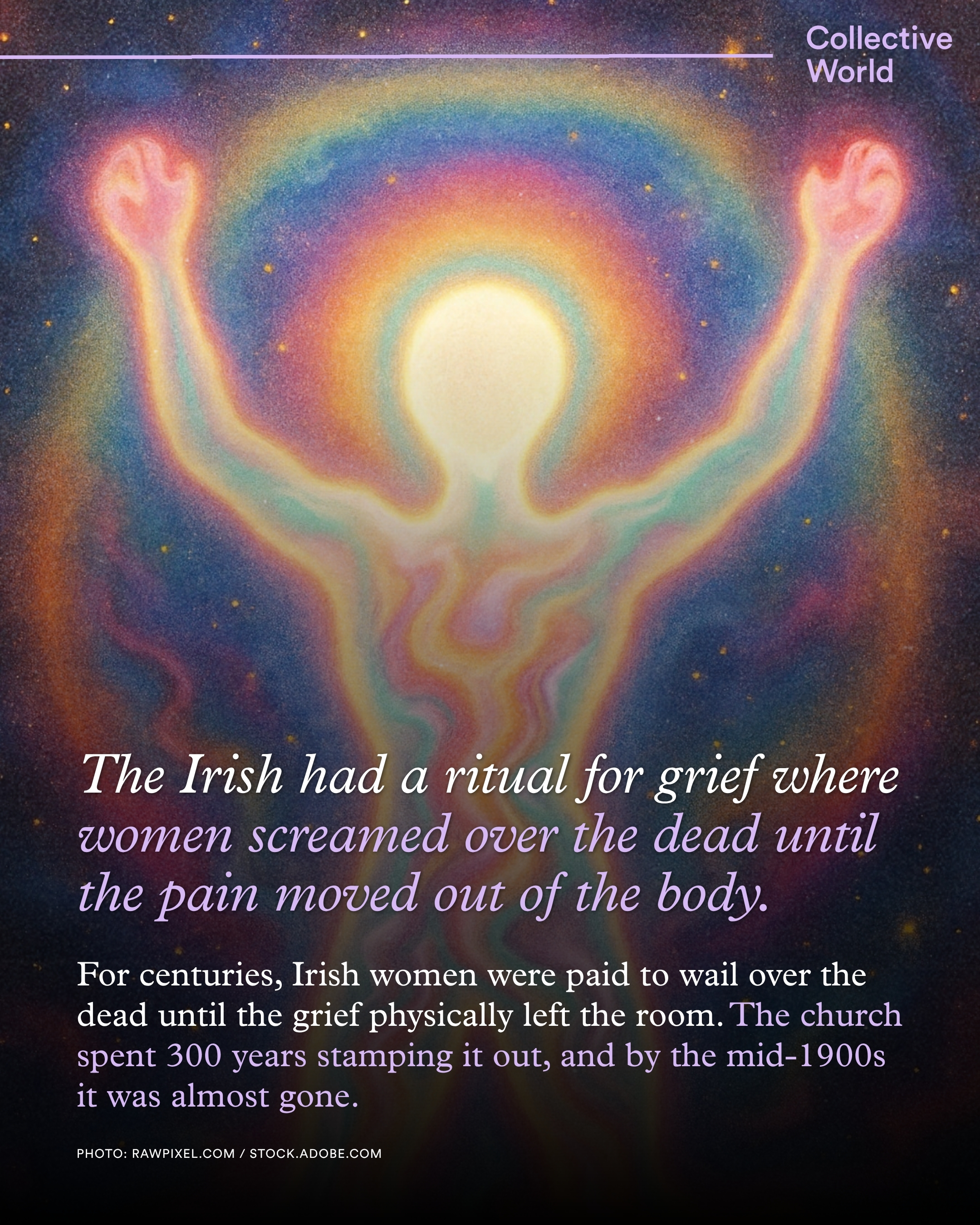
For centuries, Irish women were paid to wail over the dead until the grief physically left the room. The church spent 300 years stamping it out, and by the mid-1900s it was almost gone.
Keening, from the Irish “caoineadh,” was a full-body wail let out over the dead. Women gathered around the coffin, pounded on it, chanted the person’s name, and let sound carry what words couldn’t. It could go on for days, and it was sometimes led by a professional keener — someone whose whole gift was knowing how to open the sound and pull everyone else’s grief up through it.
No one was expected to hold themselves together. No one was apologizing for the noise they made. The grief was given a shape you could hear from the road, and the sound said, out loud, that something irreplaceable had been lost forever. You didn’t have to explain it. Your pain was held.
This wasn’t a performance. It was an ancient way to move through grief, built on the idea that pain had to be let loose through sound and motion instead of trapped in the body. Grief was treated as a thing with weight. It was seen as something that could sit inside of a person and refuse to move unless it was called out into the open. The keening was the calling.
And there was a strange mercy in doing it together. When the wail belonged to the whole room, no single mourner had to carry the unbearable part alone. You broke down inside a circle that had broken down with you, and the falling apart was allowed to run its course instead of being repressed or hidden away.
The Catholic Church started speaking against it as early as 1614. Priests called it pagan and uncivilized, a threat to the natural order. By 1748, keening in public could get you excommunicated. What had once been sacred was recast as something shameful — too loud, too old, too much of the body and not enough of the composure the new order prized.
By the mid-1900s the tradition was basically gone. It was worn down slowly, one generation quieter than the last, until the sound that used to carry grief out of the room had nowhere left to live.
What was lost with it was a space where people were allowed to fall apart and weren’t alone doing it. We mourn now in silence, and we wonder why grief feels impossible to move through. We hold it in, keep the noise down, get back to work — and the pain that used to have a way out just makes a home within us.
That is the cost of losing the wail — the permission it carried: that grief is meant to be loud, meant to be shared, meant to leave the body instead of settling into it.