
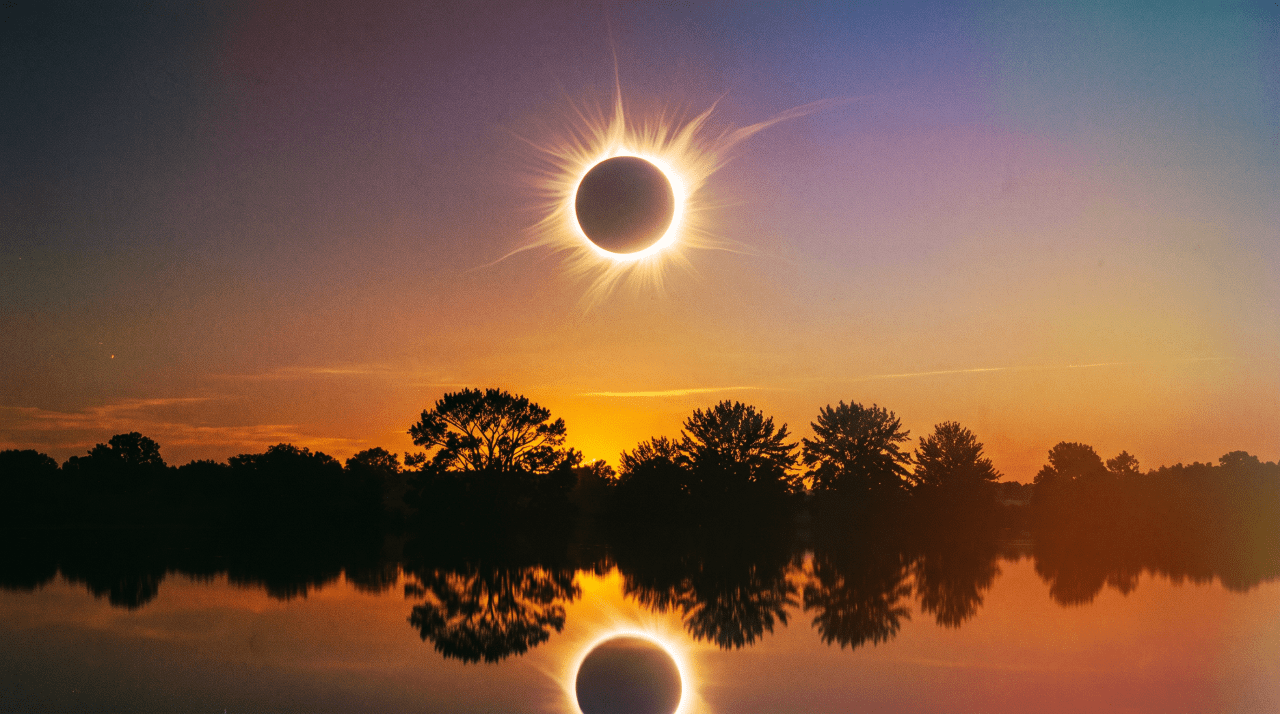
The Sky Pulls Off a Rare Triple on August 12, 2026: Eclipse, Meteor Shower, and Six Planets in a Row

One day, three reminders from the sky that the rare things are worth waiting for — and that showing up to witness them is its own kind of grace.
Three separate sky events land on the same day this August: a total eclipse, the peak of the Perseid meteor shower, and six planets strung across the dawn. Any one of them is worth a clear night. Getting all three on one date almost never happens.
The same New Moon that darkens the Sun on August 12 also clears the sky for the Perseids, and that lucky overlap is what makes the date rare. A new moon means no moonlight washing out the meteors, so under dark skies you could see up to 100 an hour, with bright fireballs that leave lingering trails.
The total solar eclipse is the first visible from mainland Europe since 1999. Its narrow path of totality crosses Iceland, the North Atlantic, and northern Spain, with the longest darkness (about 2 minutes 18 seconds) over the ocean near Iceland. Much of Europe, Canada, and the northern US will catch a partial bite, though Florida sees nothing. Never look at a partial Sun without certified ISO 12312-2 eclipse glasses.
Before sunrise that same day, six planets stretch along the sky: Jupiter, Mercury, Mars, Uranus, Saturn, and Neptune. Mars and Saturn are the easy naked-eye targets; Uranus and Neptune need binoculars or a telescope. The best window runs 30 to 60 minutes before your local sunrise.
Planet parades, eclipses, and meteor peaks all recur on their own schedules. Landing all three on one calendar day is what the “look up” reminders are about.