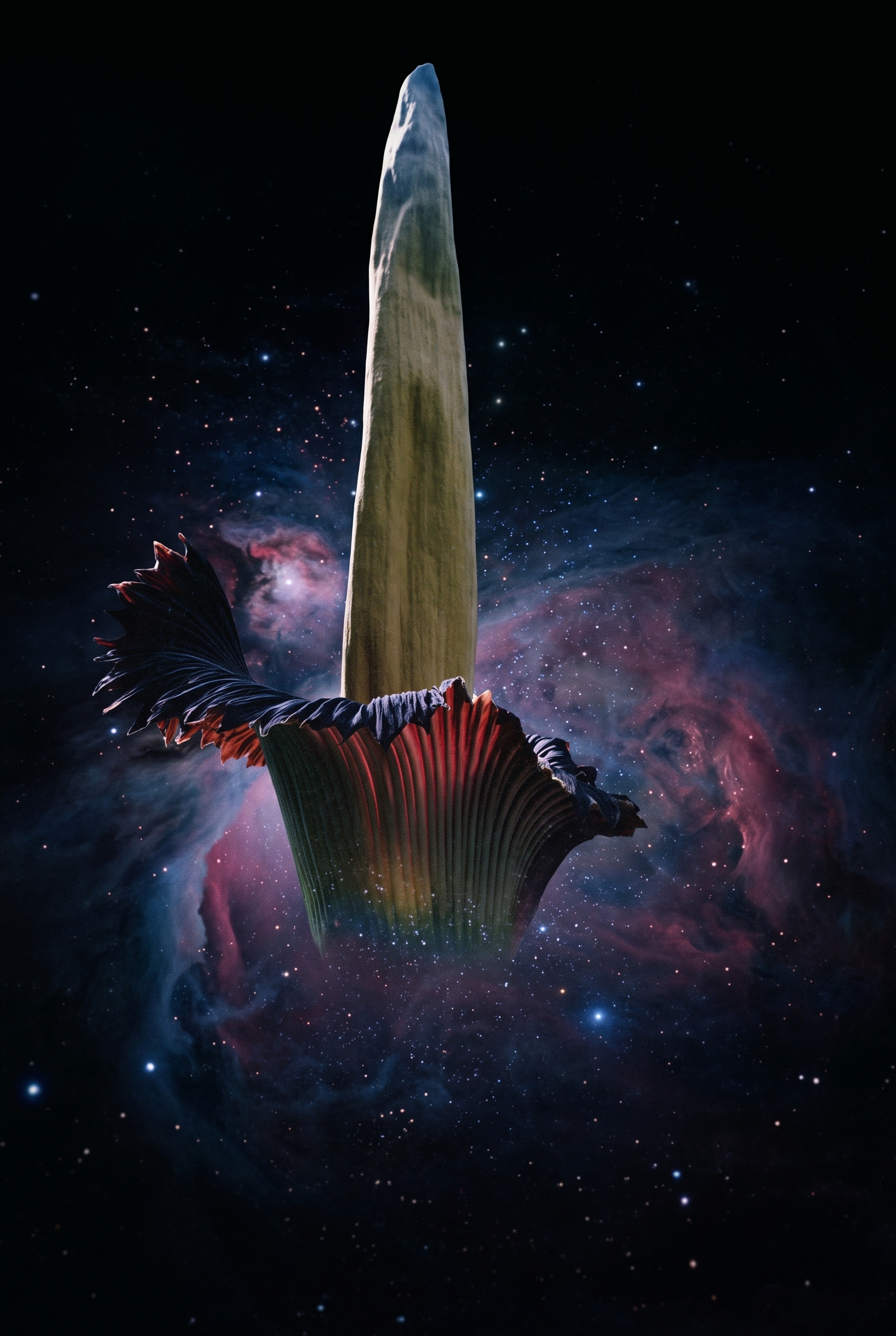

A Corpse Flower Spends Years Preparing for Up to 48 Hours of Strange Beauty
A corpse flower can tower over a person, generate its own heat and fill the air with the smell of rotting flesh. It spends years storing energy for a bloom that lasts just 24 to 48 hours.
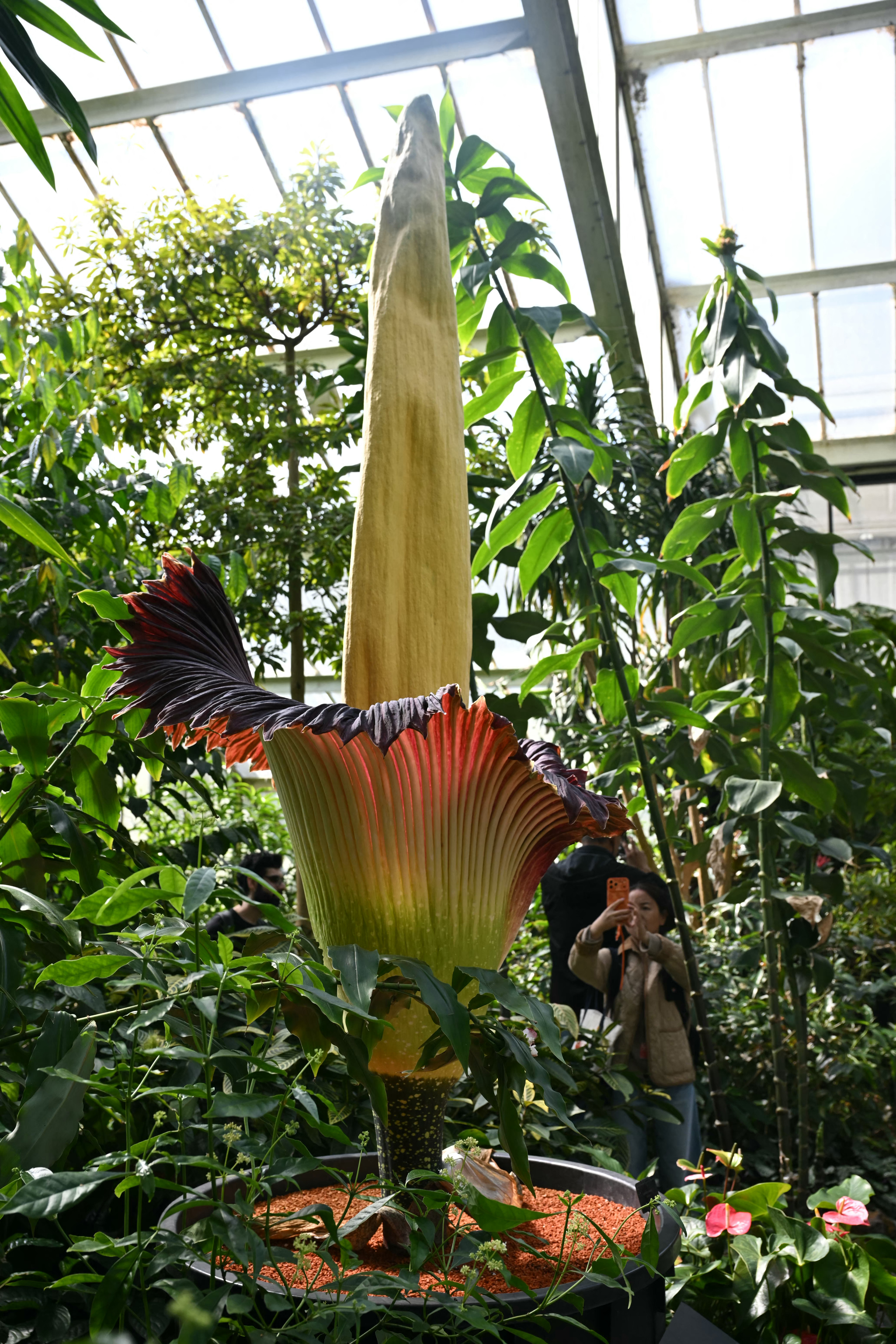
Its central spike, called a spadix, warms up to help send that smell farther through the forest. Carrion beetles and flesh flies follow the scent, drawn toward what seems to be a meal or a place to lay eggs. Their visits help pollinate the plant. Even its deep reddish coloring contributes to the illusion of decaying meat.
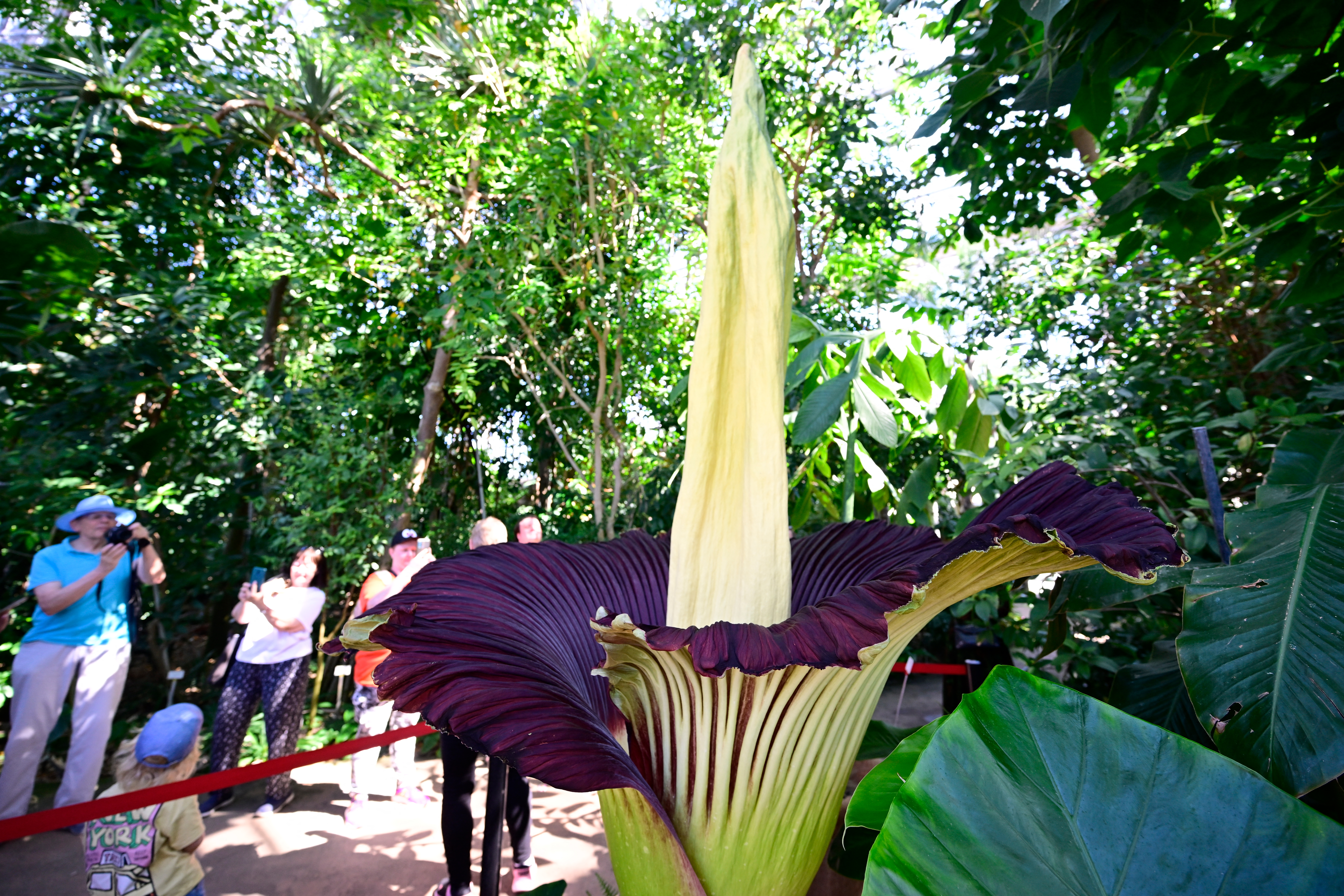
What appears to be one giant flower is actually a structure holding hundreds of tiny flowers hidden around the base of the spike. The female flowers become receptive first. By the time the male flowers release their pollen, the females are usually past that stage, helping prevent self-pollination.
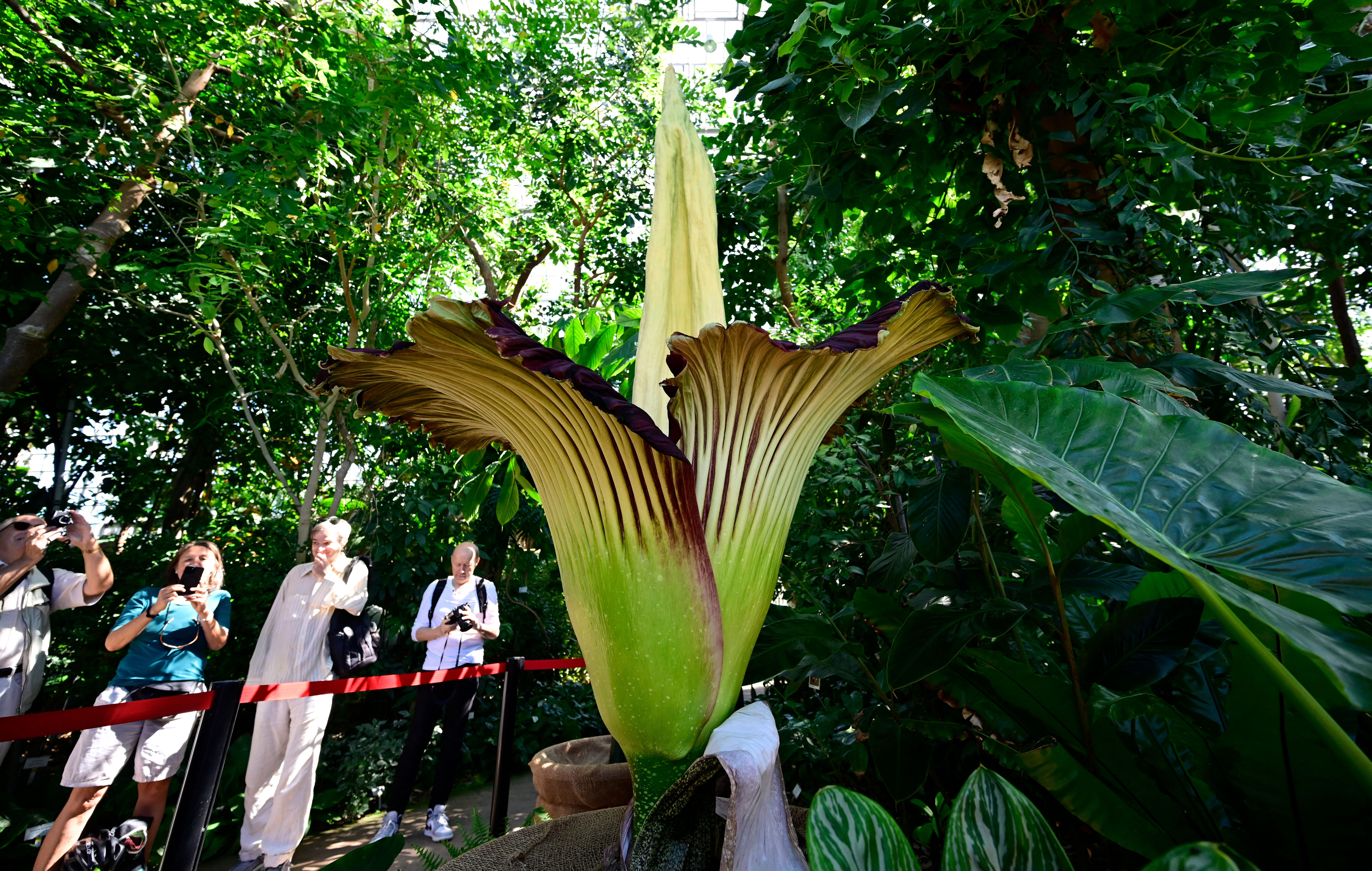
Between blooms, the plant produces a single enormous leaf that can look like a small tree. That leaf captures sunlight, helping store energy in an underground stem called a corm. A young plant can spend 7 to 10 years building enough reserves for its first bloom.
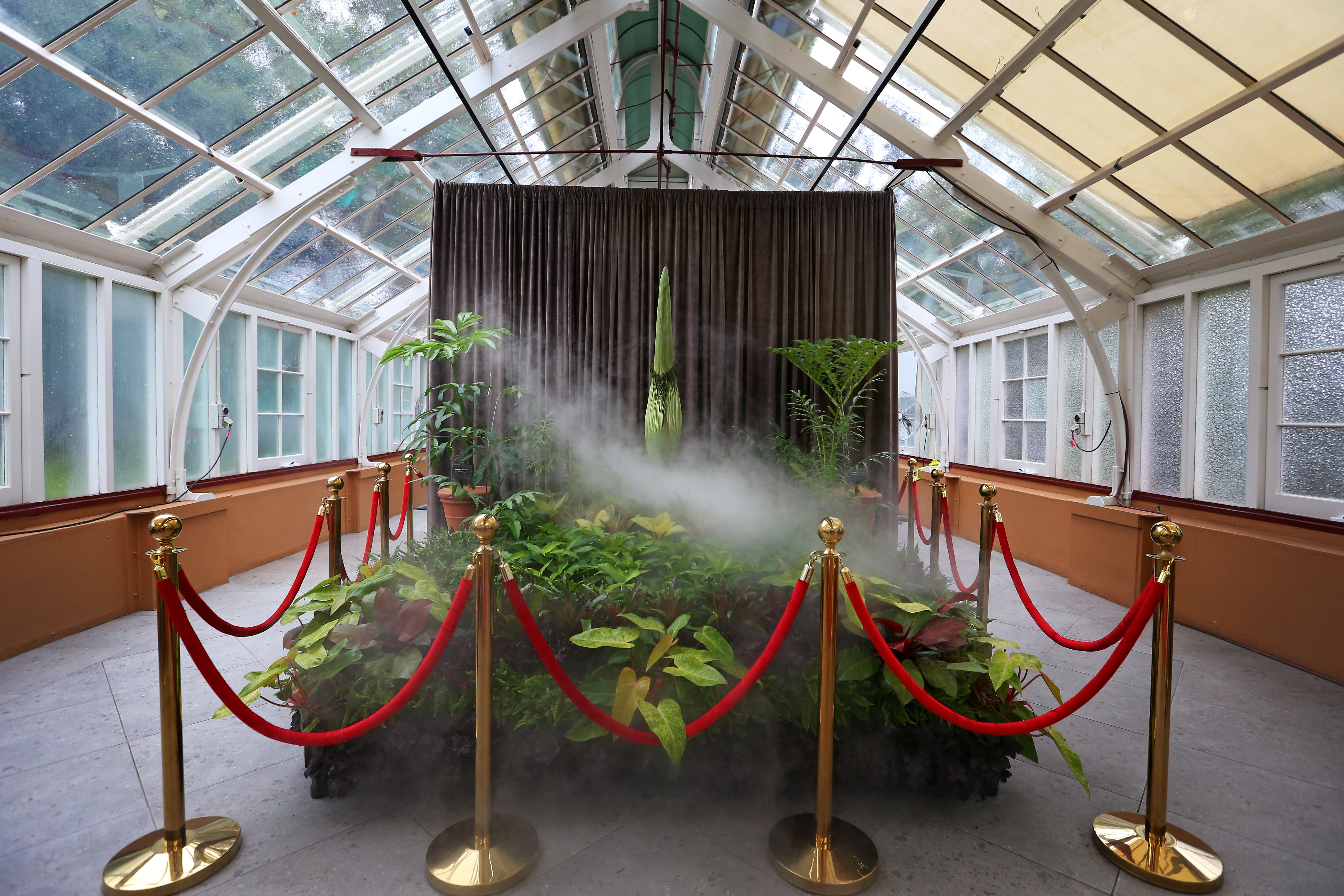
Native to Sumatra’s rainforests, corpse flowers are endangered in the wild. The brief bloom is just one chapter in a much longer life: after it collapses, the underground stem survives, and the plant can spend years gathering energy to do it all again.