
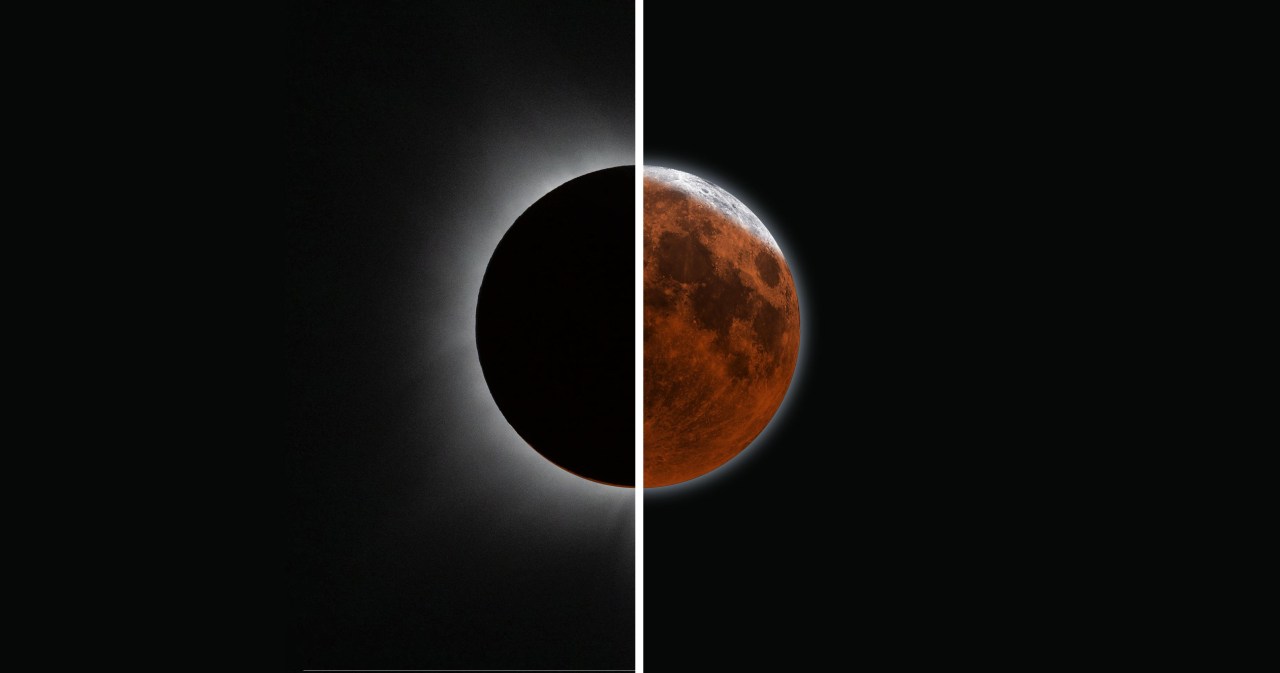
The Whole U.S. Can Watch the August 27 Lunar Eclipse Turn 96% of the Moon a Dark Red

On the night of August 27, the Moon slips into Earth’s shadow and turns a deep, eerie red. This one’s for everyone: unlike the solar eclipse two weeks earlier, every corner of the country gets a look.
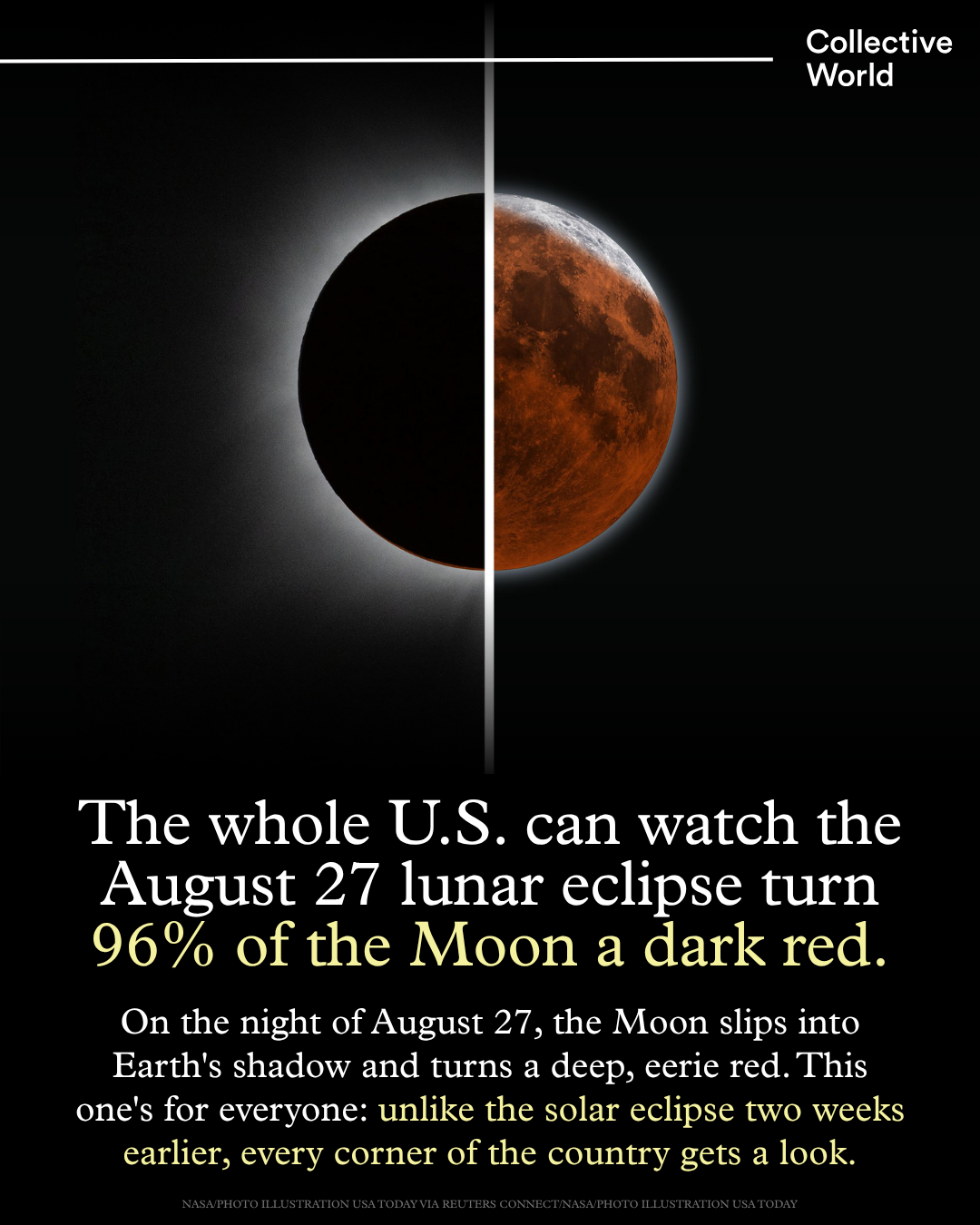
The partial lunar eclipse on August 27-28 is the first one visible from the Americas since September 2024, according to NASA. The whole thing runs 5 hours and 38 minutes, with the darkest stretch, the umbral phase, lasting 3 hours and 18 minutes, per TimeandDate.
It’s the back half of a rare double bill. A total solar eclipse crosses the Northern Hemisphere on August 12, just 15 days before the Moon’s turn, two eclipses inside one eclipse season. The last pairing like it happened in February.
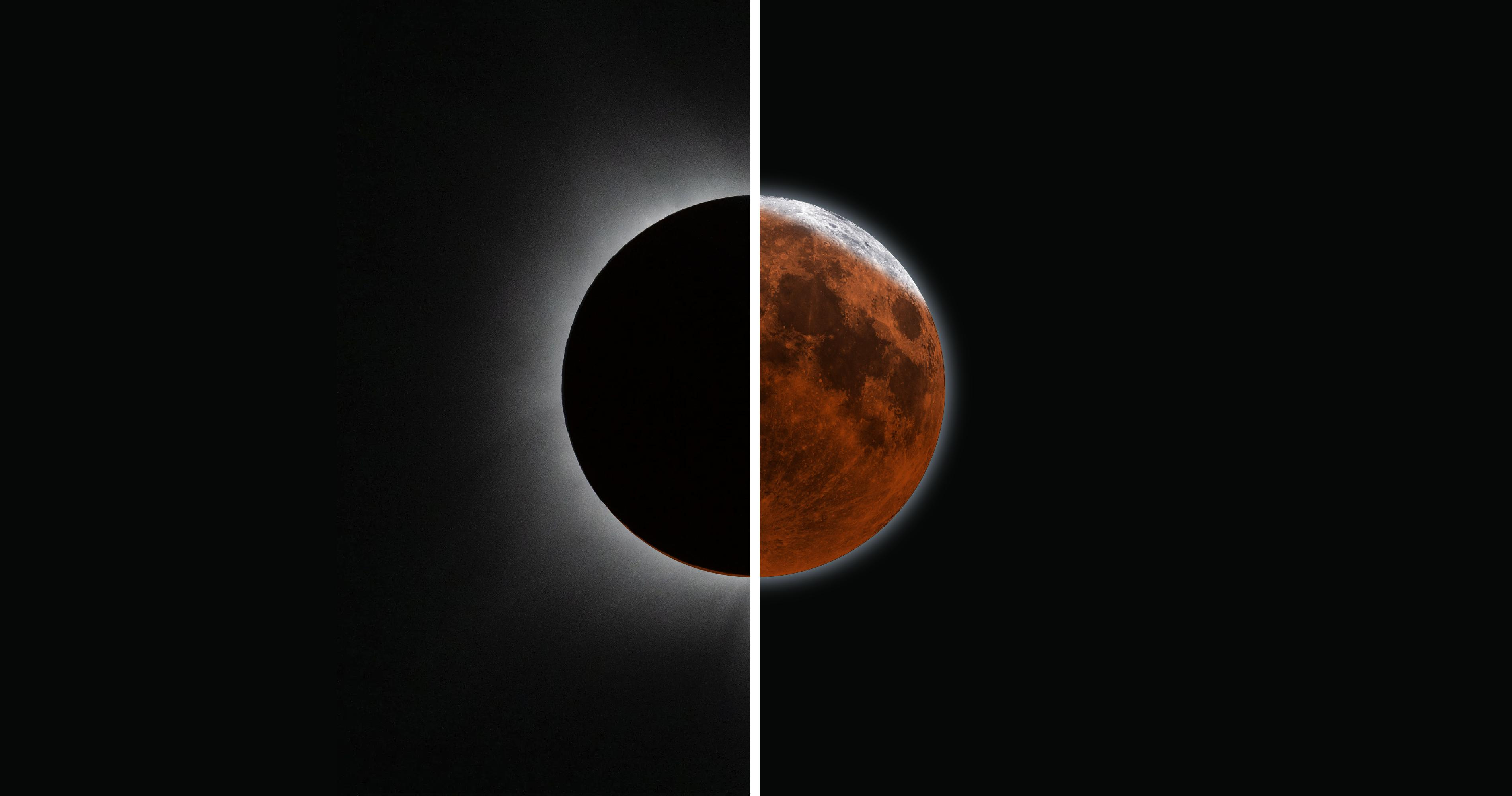
The solar eclipse won’t be as generous. Only parts of the U.S., from Alaska to North Carolina, catch a partial view, with the path of totality falling over Greenland, Iceland, northern Russia, Spain and a sliver of Portugal. NASA livestreams it starting at 1:15 p.m. EDT on August 12.
The lunar eclipse asks nothing of your eyes, no glasses at all. As the Moon crosses into shadow, roughly 96.2% of its surface goes dark, leaving one thin sliver lit at the edge.