
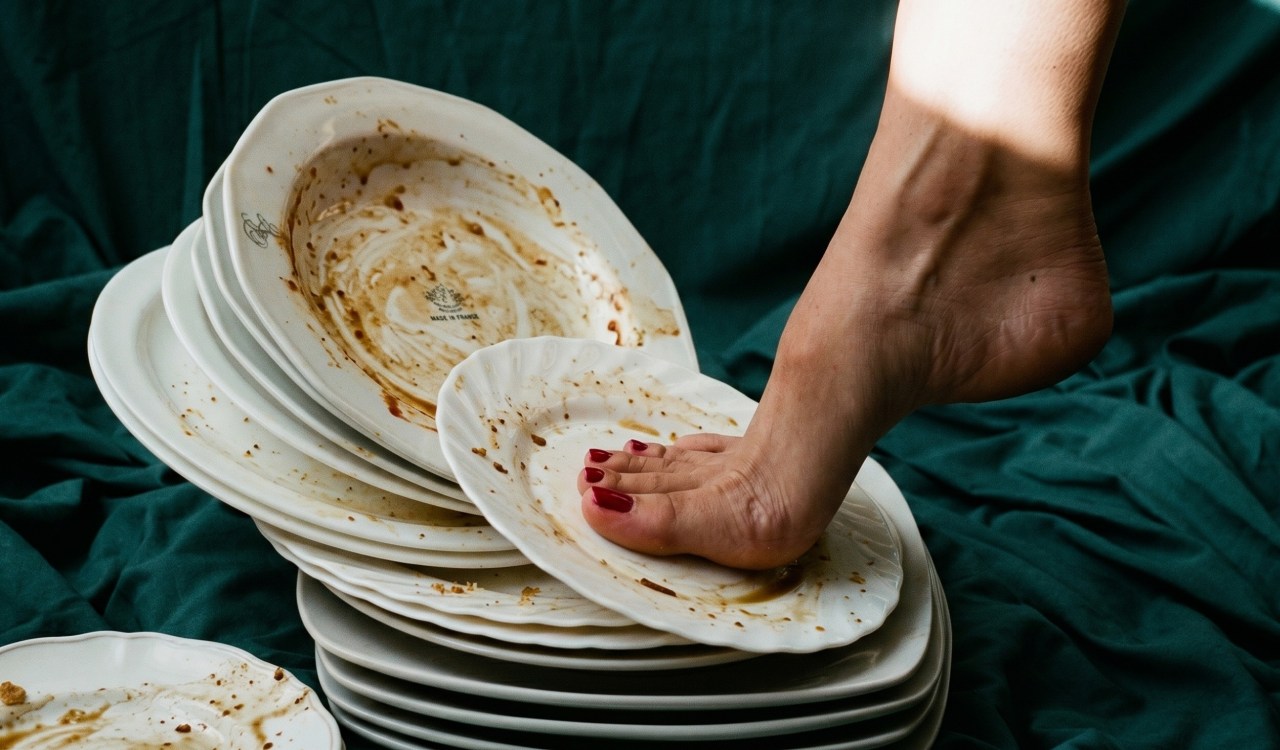
4 Birth Months That Can’t Fully Relax Until Every Dish Is Washed

Right now, someone is pretending to relax. The television is on. The couch has accepted the weight of her body. A blanket may even be involved, giving the whole scene the false appearance of leisure.
Do not be fooled.
Inside her skull, a tiny municipal inspector in sensible shoes is walking through the kitchen with a clipboard, noting the mug in the sink, the spoon on the counter, the saucepan “soaking” in a way that fools exactly no one, and the crumb near the toaster that has already begun composing its villain monologue. Her body may be horizontal, but her soul is standing at the sink with rubber gloves on.
For her, rest is not something that simply happens. Rest must be unlocked. Earned. Stamped. Approved by the invisible committee that lives somewhere behind the breastbone and has never taken a holiday. They will tell you they “just like things clean,” which is technically true in the same way a dragon “just likes” guarding gold.
Here are the 4 birth months most likely to be emotionally unable to sit down while one speck of dust remains uncleaned.
January
Your idea of “leaving it until morning” is the kind of moral collapse that leads, eventually, to raccoons in the pantry and civilization crumbling into dust. You know this sounds dramatic. You also know dramatic people occasionally have clean kitchens.
A dish in the sink is not merely a dish. It is a loose end, a tiny ceramic accusation, a wet little reminder that the job remains unfinished and the world is still allowed to demand one more thing from you. You have spent too much of your life being competent, composed, useful, necessary, and grimly available to let a bowl with oatmeal crust defeat you at 10:17 p.m.
So you wash it. Of course you wash it. You wipe the counter. You check the stove. You perform the final patrol like a night watchman guarding a museum full of priceless forks. Then, and only then, do you rest.
And by rest, I mean lie down and think about tomorrow’s problems in alphabetical order.
May
A dirty kitchen offends you aesthetically, spiritually, physically, and possibly legally. You do not experience a plate on the counter as “a plate on the counter.” You experience it as an act of domestic treason committed in the sovereign nation of your home.
Your space has a mood. A texture. A smell. A whole private weather system. You know when something is wrong the way a princess knows there is a pea under 47 mattresses and one extremely expensive coverlet. A glass left beside the sink hums at a frequency only you can hear, and unfortunately, the frequency is called rage.
You may insist that you are easygoing. Lovely. Flexible. A pleasure to live with, provided everyone respects the 600 invisible rules that keep the household from sliding into barbarism. To you, the rules work. Your counters gleam. Your cupboards make sense. Your sink has the blank, stainless, morally superior look of a person who has never had to apologize.
Enjoy that clean kitchen, little empress. You conquered it fair and square.
July
You can hear a dirty kitchen calling you from another room. Not loudly. Not rudely. Just enough. A little clink of unfinished responsibility. A little ghost-rattle from the sink. A little domestic SOS sent directly to the part of you that has always believed love means noticing what everyone else leaves behind.
You wash the dishes because someone has to, and somehow that someone keeps wearing your face. You know where the sponge is. You know which pan needs soaking and which pan needs immediate intervention from the Department of Serious Scrubbing. You know that tomorrow morning will feel softer if tonight ends with clean counters, a dry sink, and no mysterious fork lurking in the drain like a silver eel.
The problem is that care can become a full-time religion if nobody tells you to clock out. You are allowed to be loved in a messy kitchen. You are allowed to sit down before the universe has been polished to a shine. You are even allowed to let someone else help.
You will supervise them, obviously. Let’s not ask for miracles before bedtime.
September
You know exactly what this is, which makes the whole spectacle even more ridiculous. You have named the pattern, traced the wiring, identified the trigger, and developed a calm little vocabulary for why one unwashed dish makes your nervous system start behaving like a smoke alarm with a graduate degree.
None of that has stopped you.
Self-awareness is useful in many areas of life. It helps you apologize, recalibrate, improve your habits, and make fewer catastrophic decisions in public. Here, it has mostly given you better language for explaining why you are still standing at the sink with damp sleeves, a furrowed brow, and the air of a surgeon removing a bullet from the nation’s last surviving prince.
You do not simply clean. You restore order. You correct the visible world until it stops offending the invisible one. Every dish gets washed, every surface gets wiped, every crumb gets hunted down like a fugitive.
Then you finally sit. Ten minutes later, you remember the laundry.