
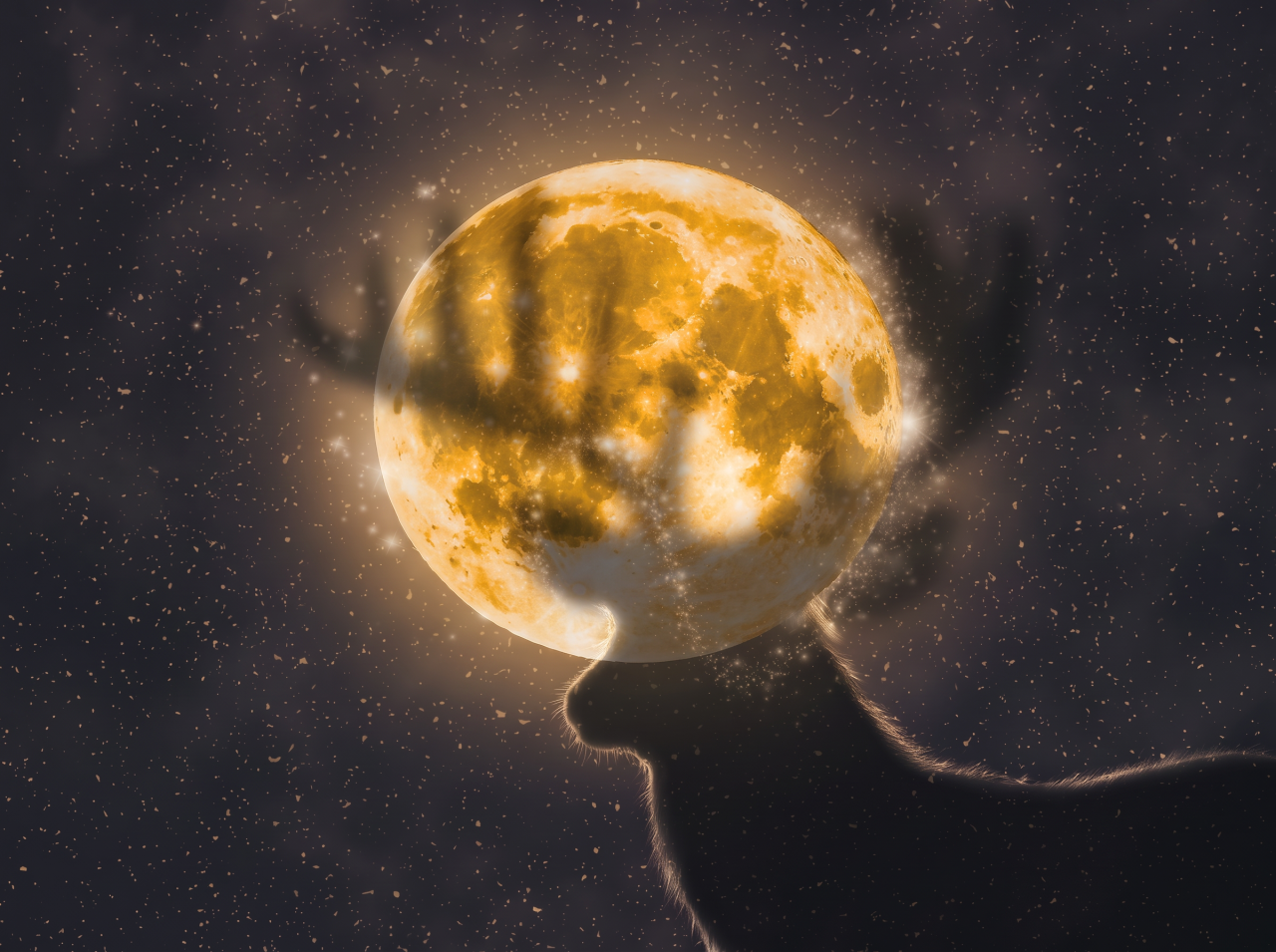
The Full Buck Moon Is Opening the Door Between Your Old Life and Your Next One

On July 29, 2026, the Full Buck Moon reaches its peak with the Moon in Aquarius, and the collection of factors around this lunation makes it one of the most astrologically charged full moons of the year. The Sun in Leo sits directly opposite, conjunct Jupiter in a tight alignment astrologers call the cazimi — the annual meeting of the Sun and Jupiter that traditional astrology has long treated as the single most fortunate day of any Jupiter transit. In other words, the “Day of Miracles” in Leo and the Full Buck Moon are arriving in the same sky, in the same hours, pointing in the same direction. This is not simply a full moon amplified by Jupiter; it is two of the most potent events of the summer landing at once.
There is more layered underneath it. This Full Moon in Aquarius is the first lunation on the brand-new Leo–Aquarius nodal axis, the eclipse cycle that formally opens on July 27th when the Lunar Nodes shift signs. It is also the last full moon before eclipse season begins on August 12th. And the Moon sits in a tight conjunction with Pluto in Aquarius, which tends to ensure that whatever gets illuminated is illuminated completely — without the softening of distance or the comfort of only partly seeing. July 29th may be the last ordinary full moon of the summer, but it is anything but ordinary.
What the Buck Moon Actually Is
The July full moon has been called the Buck Moon for centuries, a name rooted in the observation, recorded in the Farmer’s Almanac and drawn from Native American tradition, that male deer antlers reach an accelerated point of growth during this stretch of midsummer. The antlers, which have been pushing outward since spring in soft, velvet-covered tines, are now approaching their full size. The growth that began in the softer months has become visible, undeniable, ready.
The same month’s moon has gone by other names as well. It has been called the Thunder Moon, a nod to the frequent summer storms of July, and the Hay Moon, marking the season of cutting and gathering hay. In some traditions it appears as the Ripe Corn Moon or the Blueberry Moon. What these names share is a theme of fullness achieved through patient growth — the particular abundance that belongs to things tended over time, finally reaching the point where what was planted becomes what can be harvested.
That theme is unusually resonant in 2026. What the Buck Moon illuminates is the first visible evidence of what a season of planting has been producing — not the harvest itself, which comes later in the approaching eclipse season, but the proof that what was planted is growing. The antlers forming out of sight are reaching the point where their growth becomes impossible to miss.
The Leo–Aquarius Opposition at the Center
Every full moon is a conversation between two signs sitting directly across from each other on the zodiac wheel. This one stretches between Leo and Aquarius — between the heart and the mind, the individual and the collective, the person who needs to be fully seen and the sign that treats visibility as a responsibility toward something larger than the self.
Leo is the sign of the creative heart, of the specific and irreplaceable quality of an individual fully expressed. Leo asks what is uniquely yours, what you can offer that exists in no one else, and what creative courage it takes to put that into the world rather than managing it into something more acceptable. With Jupiter amplifying everything in the sign, Leo season has been pressing those questions with unusual force.
Aquarius, where the Moon is full, meets that self-expression with a wider question: who is it all for? The Aquarian pull is toward the collective, toward contribution and belonging beyond the self. A full moon on this axis asks you to hold both at once — to be fully yourself and to understand that self as part of something bigger.
When and How to See It
The Buck Moon rises on July 29, 2026, reaching its fullest point when the Moon sits directly opposite the Sun. Like any full moon, it appears round and fully illuminated for roughly a day around its peak, though to the casual eye it can look full for a couple of nights on either side.
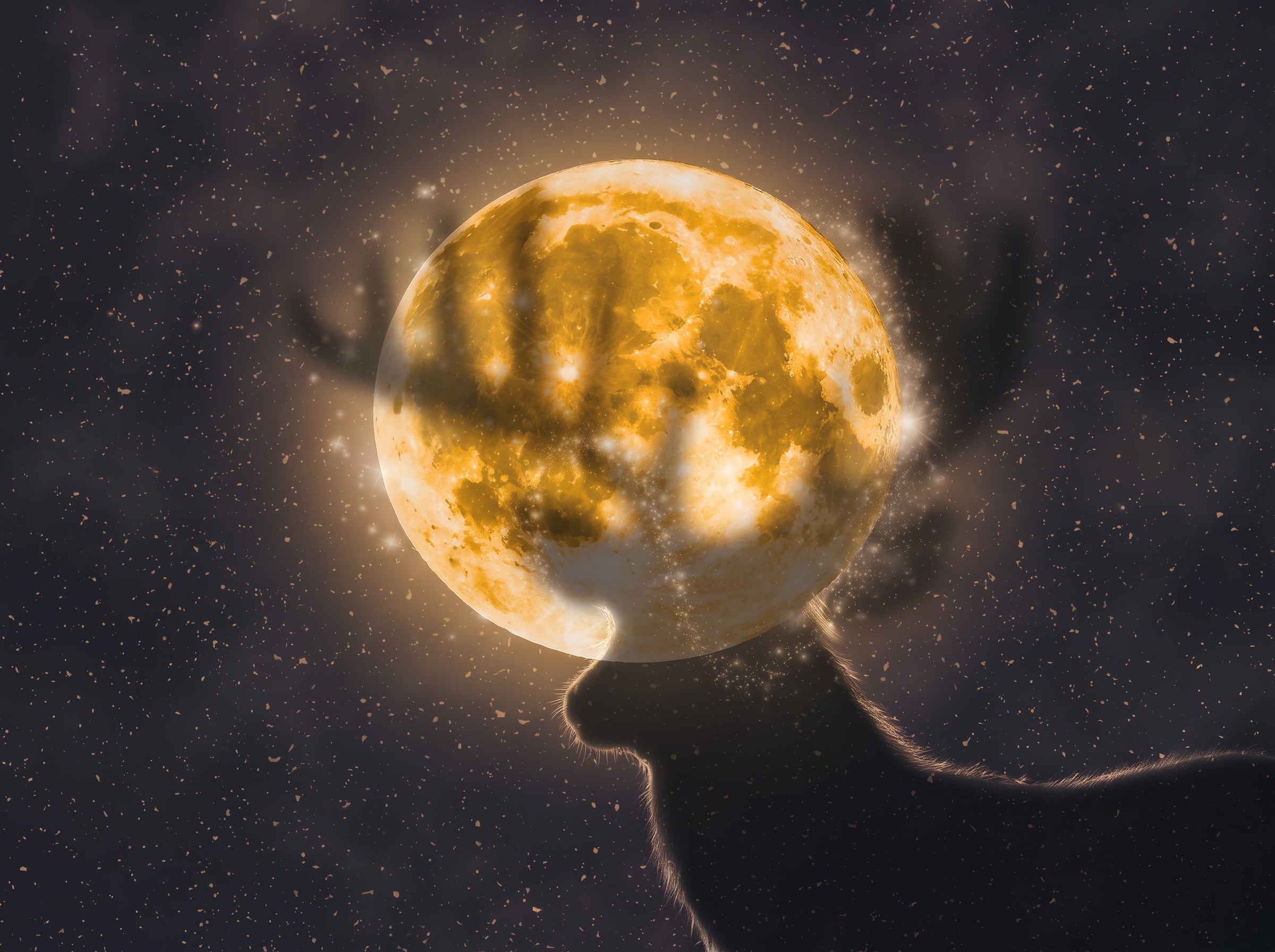
For the best view, look toward the eastern horizon around the time of moonrise, shortly after sunset. A moon low on the horizon often appears larger and takes on a warm, golden or orange hue, an optical effect caused by viewing it through more of Earth’s atmosphere. Clear skies away from bright city lights will give you the most striking view.
The Symbolism of Growth and Renewal
Beyond the astronomy, the Buck Moon has long been associated with growth. Just as a buck’s antlers regrow each year, this moon has come to represent building something new after a period of loss or change. It is a symbol of renewal, of the cycle in which something must be shed before something new can take its place.
That symbolism carries a personal resonance for many people. Over the past several months, you may have outgrown something that once felt permanent — a relationship, a version of yourself, or a future you were convinced you wanted. In that light, the Buck Moon is often read not just as an invitation to release the past, but to trust that you no longer belong there.
A Turning Point Rather Than a Sudden Change
There is a difference between letting go of the past and no longer belonging to it. For a long time, we assume healing means making peace with what happened. We revisit old conversations, wonder whether we made the right choices, and imagine different endings. But eventually something shifts. The questions stop feeling as urgent. The people who once occupied so much space begin to feel like characters from another lifetime. The future quietly becomes more interesting than the past.
It’s easy to believe growth happens the day something enters your life. More often, it happens the day something stops defining it — the day you stop measuring yourself against an old timeline, stop trying to become the version of yourself that would have made a different ending possible, and realize you don’t actually want the door you’ve been trying so hard to reopen.
The Takeaway
Whether you follow the Buck Moon for its astronomy, its rare 2026 alignment, or the reflection it invites, it remains one of the year’s most meaningful full moons. Its name reminds us that growth is a natural, recurring process, and that renewal often begins quietly. The next chapter won’t necessarily start because everything changes overnight. Sometimes it begins simply because, for the first time, you no longer feel tempted to walk backward.